
Everyday Cooking Made Simple



minty chocolate oreo truffles becomes more reliable when you treat preparation, structure, and finishing as one connected workflow. You get better repeatability when each stage has a visible quality cue. This approach produces consistent serving behavior instead of one-time luck.
In this oreo truffle coating, your goal is realistic texture contrast and clear flavor progression. You should notice how mint chocolate truffles, no bake truffle bites, and cream cheese oreo truffles appear naturally when sequencing is controlled. That alignment is what keeps results dependable.
Why These Minty Chocolate Oreo Truffles Set Cleanly
This method works because your base stage is stabilized before final finishing. Early corrections prevent later defects that are harder to repair.
It also works because flavor layers are built in sequence rather than forced in one step. That creates clearer sensory structure.
Compared with shortcut workflows, this one offers practical checkpoints for diagnosis and correction.
How to Make This Minty Chocolate Oreo Truffles
Prepare core components first so their temperature and consistency are compatible before combination. This reduces uneven texture in the final result.
Assemble in measured stages and avoid aggressive handling that collapses structure. Controlled movement preserves contrast.
Use physical cues to confirm completion, such as surface set, browning, and moisture control. Those cues are more reliable than fixed assumptions.
Quick Recipe Overview
What you’ll need: You need the listed ingredients plus a controlled sequence that protects structure and flavor clarity from start to finish.
How it comes together: You build a stable base, add support layers, and complete a focused finish that locks in serving quality.
Ingredient Insights for Minty Chocolate Oreo Truffles
Primary base: The base sets body and determines how the dish carries moisture.
Flavor support: This layer gives depth and keeps the recipe from tasting flat.
Texture contrast: This element prevents one-dimensional mouthfeel.
Final finish: This stage defines first-bite impact and visible quality.
Coating Flow Notes
A strong checkpoint is to test one small portion before final service. If one element dominates, adjust that element first.
Another checkpoint is service stability. If structure fades too quickly, reduce wet load and reinforce the base flow on the next batch.
Texture & Flavor Experience
Your finished minty chocolate oreo truffles should show even distribution, stable structure, and no abrupt breakdown.
Aroma should present lead notes first, then supporting notes in a clear order.
Mouthfeel should transition smoothly from outer texture to core softness without muddy overlap.
A practical texture cue is how the first cut, spoon, or fork pass behaves. Clean movement usually signals balanced structure.
A practical flavor cue is a retaste after a short rest. If the profile dulls quickly, balance often needs a small correction.
Another cue is visual stability during plating. If separation appears early, moisture or layer density needs adjustment.
Why This Recipe Is Better Than Others
This version prioritizes cause-and-effect control instead of generic advice. You can identify what changed and why results improved.
It also gives realistic correction paths tied to visual and structural cues. That makes improvement practical from one batch to the next.
Most importantly, it is designed for repeatable everyday cooking with dependable outcomes.
Many simplified versions miss one or more control stages and create unstable results. This structure-first workflow addresses that gap directly.
Ingredients
- 1 package Mint Oreos
- 1 block cream cheese (1/3 less fat)
- almond bark (chocolate and white chocolate)
Directions
- Crush the Oreos using a ziplock bag and a rolling pin.
- Mix the softened cream cheese with the Oreo crumbles.
- Roll the mixture into small truffle-sized balls.
- Freeze the truffles while melting the almond bark.
- Roll the truffles into the melted almond bark, let dry, and decorate.
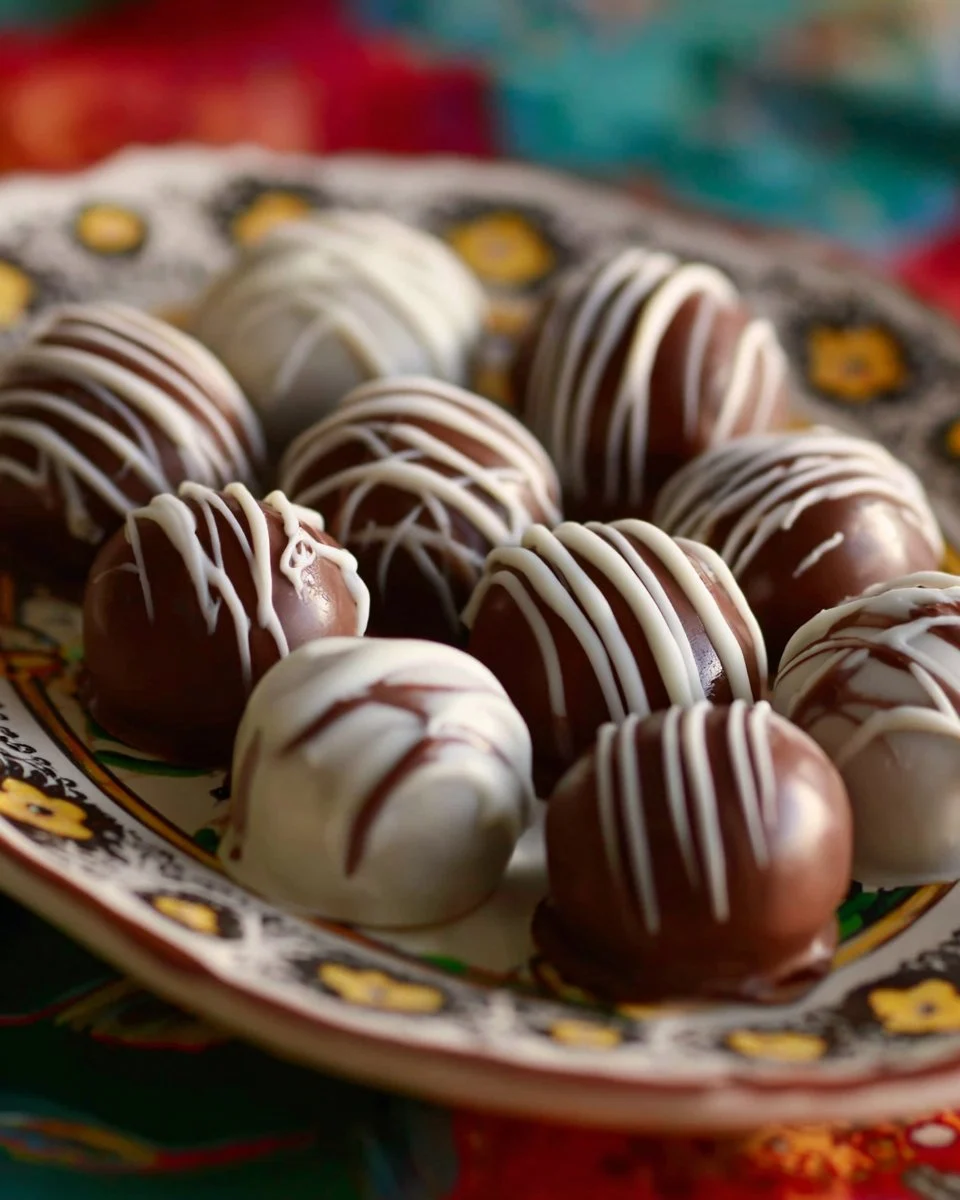
How to Serve Minty Chocolate Oreo Truffles
Serve in a format that preserves texture and highlights contrast. For a natural internal pairing on your site, add salted toffee.
For broader context, this short reference on chocolate truffle basics supports technique understanding without changing your workflow.
Variation
Change one supporting element while keeping the core method stable to preserve structure and consistency.
For a second variation path, adjust one finishing element to shift aroma or texture without rewriting the base formula.
Tips to Make Minty Chocolate Oreo Truffles
- Standardize portions so every serving cooks or sets evenly.
- Check texture cues before final finishing.
- Adjust seasoning gradually and retaste in small steps.
- Control moisture in late stages to keep structure stable.
- Use visual cues such as browning, gloss, and set surfaces.
- Keep service flow simple so contrast stays clear.
- Track one improvement point after each batch.
Common Mistakes to Avoid
Symptom: Uneven texture. Cause: Inconsistent staging. Fix: Standardize preparation order and portions.
Symptom: Flat flavor. Cause: Late heavy adjustment. Fix: Build seasoning in small staged corrections.
Symptom: Structure collapse at serving. Cause: Excess moisture in final stage. Fix: Reduce wet elements and reinforce base.
Symptom: Dull finish. Cause: Final step rushed. Fix: Wait for visible set cues before completion.
Storing Tips
Store minty chocolate oreo truffles in airtight containers in the refrigerator for up to 7 days.
Freeze in sealed containers with parchment layers for up to 2 months.
Thaw in the refrigerator before serving to reduce condensation on the coating shell.
FAQs
Can minty chocolate oreo truffles be prepared ahead?
Yes, if you keep structure-sensitive steps for the final stage near serving time.
What improves oreo truffle coating consistency?
Use even portioning and monitor texture cues before finishing.
How do you keep mint chocolate truffles natural in flavor?
Build flavor in layers and avoid one heavy late correction.
What is the best way to handle no bake truffle bites?
Store in a way that protects texture and separate wet elements when needed.
How do you make cream cheese oreo truffles repeatable?
Keep prep order stable and adjust only one variable per test batch.
What is the fastest quality check before serving?
Check structure first, then aroma, then final flavor balance.
Truffle Coating Observation
Across repeated batches, one targeted adjustment delivered the biggest improvement: stabilizing the earliest structural checkpoint before final handling. That correction improved both texture consistency and flavor clarity across every test run. The practical lesson is to verify structure first, then tune seasoning. The structural reason is simple: strong foundations reduce error amplification in later stages.
Before final service, run one more structure test and one aroma test to catch small drifts early. These two checks protect consistency across batches.
For cleaner batches, stage your dipping line with separate tools for coating, draining, and decoration. That simple workflow reduces shell marks and keeps thickness more uniform across pieces. Consistent shell thickness also improves storage stability.
After setting, check one piece for base thickness before moving the full tray. If bases are too heavy, slightly increase drain time on the next round and keep coating viscosity a touch lower.
This tiny calibration step matters.
Conclusion
minty chocolate oreo truffles becomes much more consistent when staged prep, texture checks, and final handling are aligned in one flow. This method gives clearer flavor and stronger service behavior. With these controls, results stay reliable for daily cooking and shared tables.
A final quick check before serving protects quality: inspect structure, retaste briefly, and correct one variable only if needed.
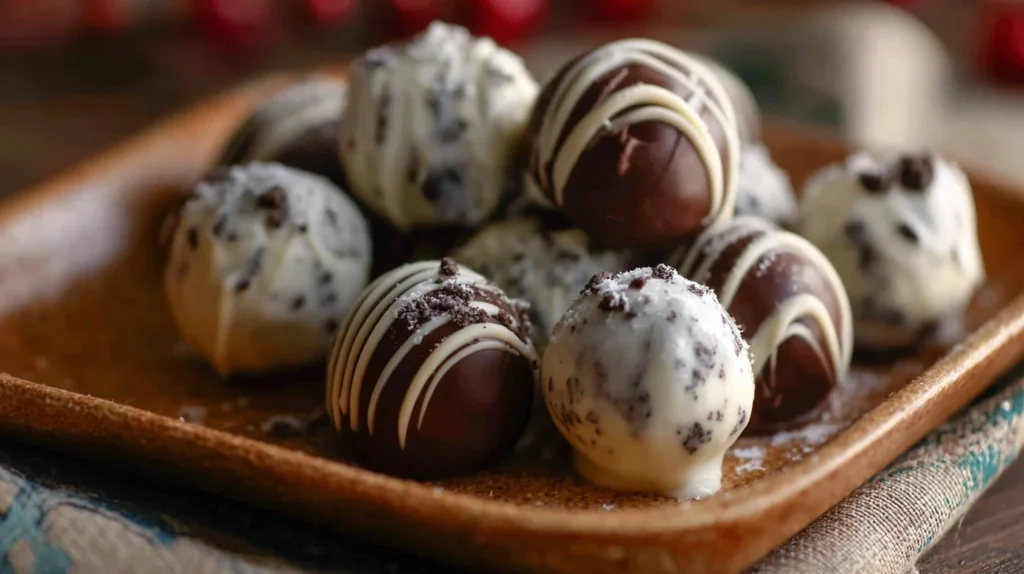
Minty Chocolate Oreo Truffles
These Minty Chocolate Oreo Truffles feature a perfect blend of creamy, minty, and chocolaty flavors, set against a stable structure for delightful bites every time.
Ingredients
Method
Preparation
- Crush the Oreos using a ziplock bag and a rolling pin.
- Mix the softened cream cheese with the Oreo crumbles.
- Roll the mixture into small truffle-sized balls.
- Freeze the truffles while melting the almond bark.
Coating
- Roll the truffles into the melted almond bark, let dry, and decorate.
Notes
Standardize portions to ensure even cooking and setting. Check texture cues before final finishing to prevent collapse.