
Everyday Cooking Made Simple


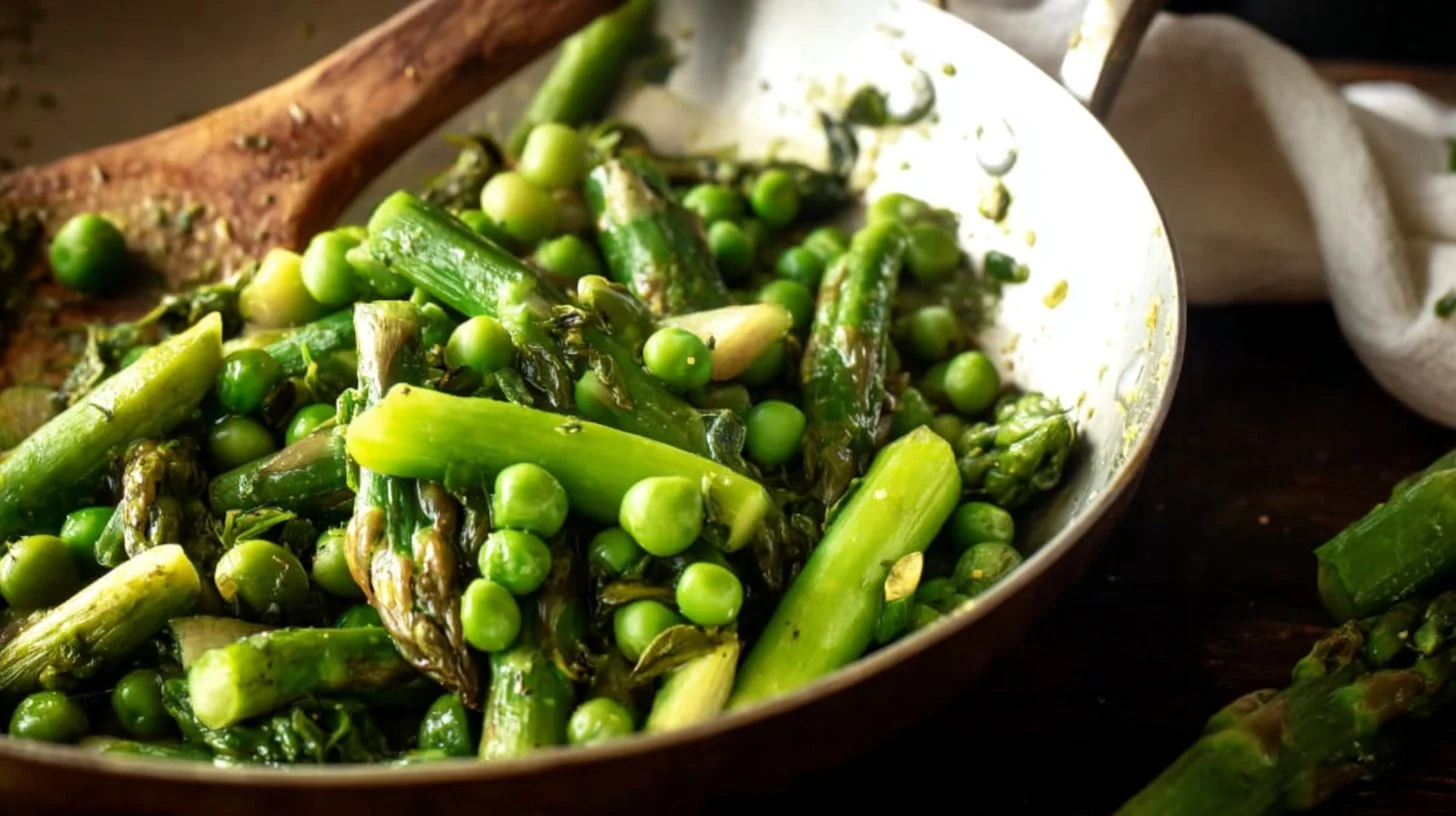
Asparagus and Pea bring bright spring flavor and tender texture to a quick pan sauté that works with many meals. For another way to use asparagus in a layered dish try asparagus quesadilla lasagna ricotta for a richer main course option.
This simple sauté balances sweet honey and browned butter while preserving the vegetables’ snap. It solves the common need for a fast, seasonal side that finishes while the main cooks.
Why Make This Recipe
This recipe is fast and forgiving. It cooks in about 10 minutes on the stovetop, so you can make it on weeknights.
The ingredient list is minimal and uses pantry-friendly items like butter and honey. You only need one bunch of asparagus and a bag of peas to get a full side.
It fits many occasions from casual family dinners to holiday plates as a fresh accompaniment. The texture contrast between crisp-tender asparagus and soft peas appeals to most palates.
How to Make Asparagus and Pea Sauté
The approach focuses on quick, high-heat cooking to develop light browning on the asparagus without overcooking the peas. You start by softening shallot in butter to create a flavorful base, then add asparagus so it browns slightly before the peas finish the dish.
Finishing with a touch of honey brightens the vegetables and gives a subtle glaze that balances savory notes. This method keeps the vegetables vibrant and prevents sogginess.
Ingredients
- 1 bunch fresh asparagus, chopped
- 1 bag frozen peas (or fresh, ideally)
- 2 tbs. butter
- 1 shallot, minced
- 1 tbs. honey
Directions
- Melt butter in a saucepan over medium-high heat.
- Add shallot to the pan and sauté for a minute or two, until soft and fragrant.
- Add asparagus to the pan and cook, stirring occasionally to prevent burning, until cooked through and slightly golden brown on the outside.
- Add peas and sauté for a few minutes until cooked.
- Stir in honey until well mixed.
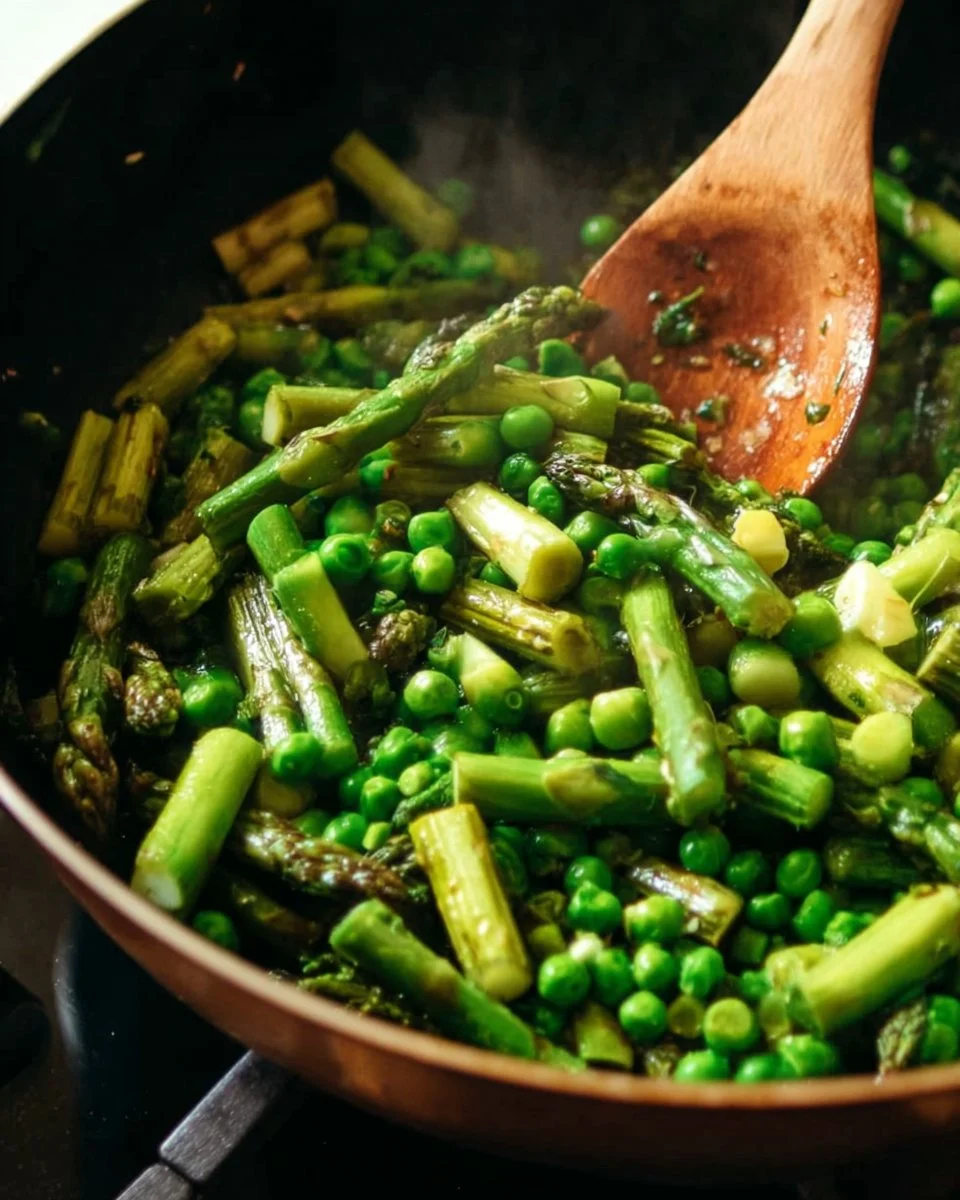
How to Serve Asparagus and Pea Sauté
Serve this asparagus and pea side dish hot from the pan so it keeps its crisp-tender texture. Spoon it alongside roasted or grilled proteins such as chicken, salmon, or pork.
For a lighter plate, add a squeeze of lemon juice and a scattering of chopped herbs like parsley or dill. For a richer option, top with a small crumble of feta or grated Parmesan.
Pair the dish with a dry white wine like Sauvignon Blanc or a sparkling water with lemon for a refreshing match. The simple presentation benefits from a clean plate and a light garnish of lemon zest.
How to Store Asparagus and Pea Sauté
Cool the sauté completely at room temperature for no more than one hour before storing. Transfer to an airtight container and refrigerate; it will keep well for 3 to 4 days.
To freeze, spread the cooled vegetables on a tray to flash-freeze, then transfer to a freezer-safe container for up to 2 months. Reheat gently in a skillet over low heat with a splash of water or butter to restore moisture.
Avoid storing hot vegetables in sealed containers, which can create excess condensation and soften textures. Label containers with the date to track freshness.
Tips to Make Asparagus and Pea Sauté
Start with one short sentence about improving results.
- Trim asparagus ends and cut spears to uniform lengths for even cooking.
- Use fresh asparagus chopped into 1- to 2-inch pieces for consistent texture.
- Heat the pan first, then add butter so the butter browns slightly before the shallot.
- Keep an eye on the shallot; a quick butter and shallot sauté softens it without burning.
- Add peas after the asparagus is mostly cooked to prevent overcooking.
- Stir in honey at the end and toss briefly so you stir in honey until well mixed without making the pan sticky.
- Taste before adding salt; good butter and honey can balance flavors with minimal seasoning.
- If using frozen peas, do not thaw fully—add them straight to the hot pan to preserve shape.
Common Mistakes to Avoid
Overcrowding the pan reduces browning and can steam the vegetables instead. Use a wide skillet or cook in batches to keep pieces separated.
Adding the peas too early makes them mushy. Add peas near the end so they stay bright and retain a slight snap.
Variations
Add minced garlic with the shallot for more pungent flavor. Toss in lemon zest and a splash of white wine after cooking for acidity. For a smoky note, briefly stir in chopped cooked bacon or pancetta at the end.
Swap honey for a teaspoon of maple syrup or a drizzle of balsamic reduction to change the sweet profile. You can also finish with toasted almonds or pine nuts for crunch.
FAQs
Can I use frozen asparagus instead of fresh?
Frozen asparagus is workable but tends to be softer; reduce cooking time and cook from frozen if needed.
Should I peel asparagus stalks?
Thicker stalks benefit from light peeling near the base; thin spears do not need peeling.
Can I substitute shallot with onion?
Yes, use a small sweet onion if you don’t have shallot; reduce the quantity slightly.
Is honey necessary in this recipe?
Honey adds a pleasant glaze and balance, but you can omit it or substitute with a small squeeze of lemon for brightness.
How do I reheat leftovers without losing texture?
Reheat briefly in a skillet over medium-low heat with a small splash of water or butter to restore tenderness without overcooking.
Can I make this vegan?
Replace butter with a plant-based margarine or olive oil and omit honey or use maple syrup to keep it vegan.
Conclusion
For a similar take and more ideas, see the Sautéed Asparagus and Peas recipe which shares complementary techniques and serving tips.