
Everyday Cooking Made Simple


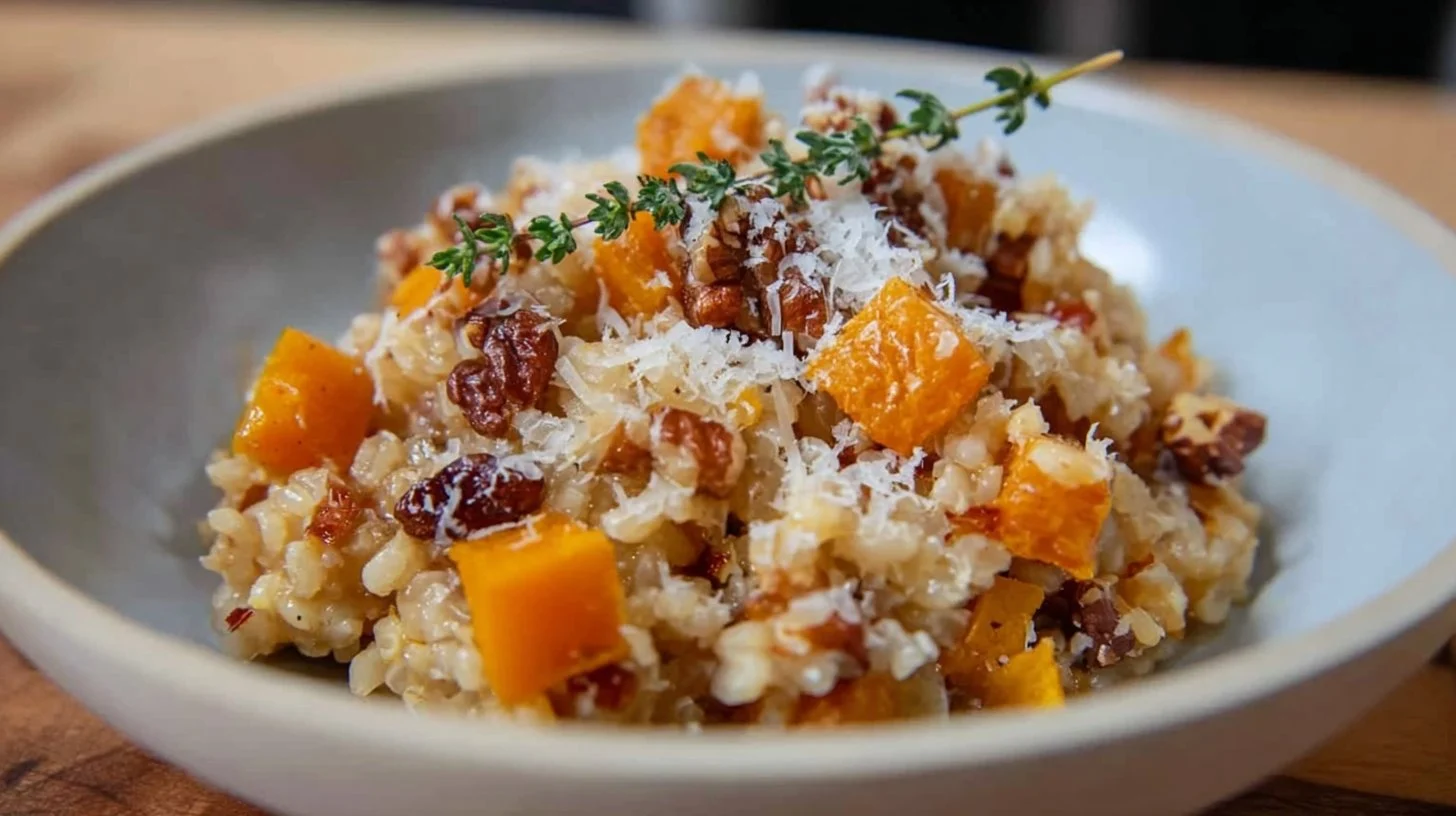
roasted butternut squash risotto gives stronger results when preparation, texture control, and finishing are treated as one connected workflow. You get more reliable outcomes when each stage has a clear physical checkpoint. This makes repeated batches easier to calibrate.
In this butternut risotto recipe, your target is realistic contrast and clear flavor progression. You should notice how walnut risotto topping, autumn risotto bowl, and creamy squash risotto appear naturally when sequencing is correct. This is what supports consistency.
What Makes This Roasted Butternut Squash Risotto with Sugared Walnuts Stand Out
This approach works because you stabilize the base before the final stage. Early corrections prevent larger late-stage defects.
You also control moisture and seasoning in layers, which creates a cleaner flavor structure and better service behavior.
Compared with shortcuts, this method gives clear troubleshooting points with practical cause-and-effect logic.
How to Make This Roasted Butternut Squash Risotto with Sugared Walnuts
Prepare all core elements so texture and temperature are compatible before combination. This reduces uneven set and inconsistent bite.
Assemble in measured stages and avoid aggressive handling that collapses structure. Controlled movement protects contrast.
Finish using visual and structural cues such as set surfaces, even coating, and stable moisture behavior.
Quick Recipe Overview
What you’ll need: You need the listed ingredients and a staged workflow that protects structure through serving.
How it comes together: You build a stable base, add support layers, and complete a controlled final stage for clean results.
Ingredient Insights for Roasted Butternut Squash Risotto with Sugared Walnuts
Walnuts, melted butter, and brown sugar: You create a crisp sweet-savory topping that adds contrast to the creamy risotto base.
Butternut squash: Roasting concentrates squash flavor and keeps cubes intact, so they stay distinct in the final dish.
Olive oil, garlic, pancetta, and onion: You build a savory aromatic foundation that balances squash sweetness.
Arborio rice: You rely on its starch release for signature risotto creaminess while keeping the grains defined.
Chicken broth and water: You hydrate rice in stages and control texture without over-thickening.
Chardonnay: You add acidity and aroma lift that cut through rich notes from cheese and pancetta.
Lemon thyme, salt, and black pepper: You sharpen flavor structure and keep the finish bright and focused.
Parmigiano-Reggiano: You fold in a savory finishing layer that binds the risotto and enhances overall depth.
Batch Notes for Better Squash Risotto Balance
A practical checkpoint is a small pre-serve taste and structure test. If one component dominates, correct only that component first.
A second checkpoint is plate behavior. If breakdown appears quickly, reduce wet load and strengthen the base flow on the next run.
Texture & Flavor Experience
Your finished roasted butternut squash risotto should show clear structure, visible contrast, and no abrupt collapse during serving.
Aroma should present lead notes first, followed by supporting notes in a balanced sequence.
Mouthfeel should move smoothly from outer texture to core softness without muddy overlap.
A strong texture cue is how the first cut, spoon, or fork pass behaves. Clean movement usually signals stable internal structure.
A strong flavor cue is retasting after a short rest. If the profile dulls quickly, small balance correction is usually needed.
Why This Recipe Is Better Than Others
This version emphasizes operational control, not filler language. You can see which step caused each outcome and fix it quickly.
It also includes practical recovery logic that works in real kitchens with varied equipment and batch sizes.
Most importantly, it is tuned for repeatable quality, not one-off results.
Ingredients
- 1/2 cup coarsely chopped walnuts
- 1 tablespoon butter, melted
- 1 teaspoon brown sugar
- 1/8 teaspoon freshly ground black pepper
- 2 cups (1/2-inch) cubed peeled butternut squash
- 1 tablespoon olive oil
- 2 teaspoons minced fresh garlic
- 4 cups fat-free, lower-sodium chicken broth
- 1/2 cup water
- 1/4 cup pancetta, finely chopped (or bacon)
- 1 cup finely chopped onion
- 1 1/4 cups uncooked Arborio rice
- 1/2 cup chardonnay
- 2 tablespoons finely chopped fresh lemon thyme (or 1 1/2 tablespoons thyme plus 1/2 teaspoon grated lemon rind)
- 1/4 teaspoon salt
- 1/4 teaspoon freshly ground black pepper
- 1/4 cup shaved Parmigiano-Reggiano cheese
Directions
- Preheat oven to 400 degrees.
- Arrange walnuts in a single layer on a jelly-roll pan and bake for 5 minutes until toasted, stirring twice.
- Drizzle melted butter over warm nuts, sprinkle with brown sugar and black pepper, and toss to coat.
- Toss butternut squash with olive oil and arrange in a single layer on a jelly-roll pan.
- Bake for 15 minutes until just tender; then stir in garlic and set aside.
- In a saucepan, bring chicken broth and water to a simmer.
- In a large saucepan over medium heat, cook pancetta until browned, about 5 minutes.
- Add onion and cook for 3 minutes until tender.
- Stir in rice and cook for 2 minutes, then add chardonnay and cook for 1 minute until nearly absorbed.
- Gradually stir in broth mixture, 1/2 cup at a time, stirring until absorbed each time (about 20 minutes total).
- Stir in the squash, thyme, salt, and pepper.
- Top with cheese and sugared walnuts before serving.
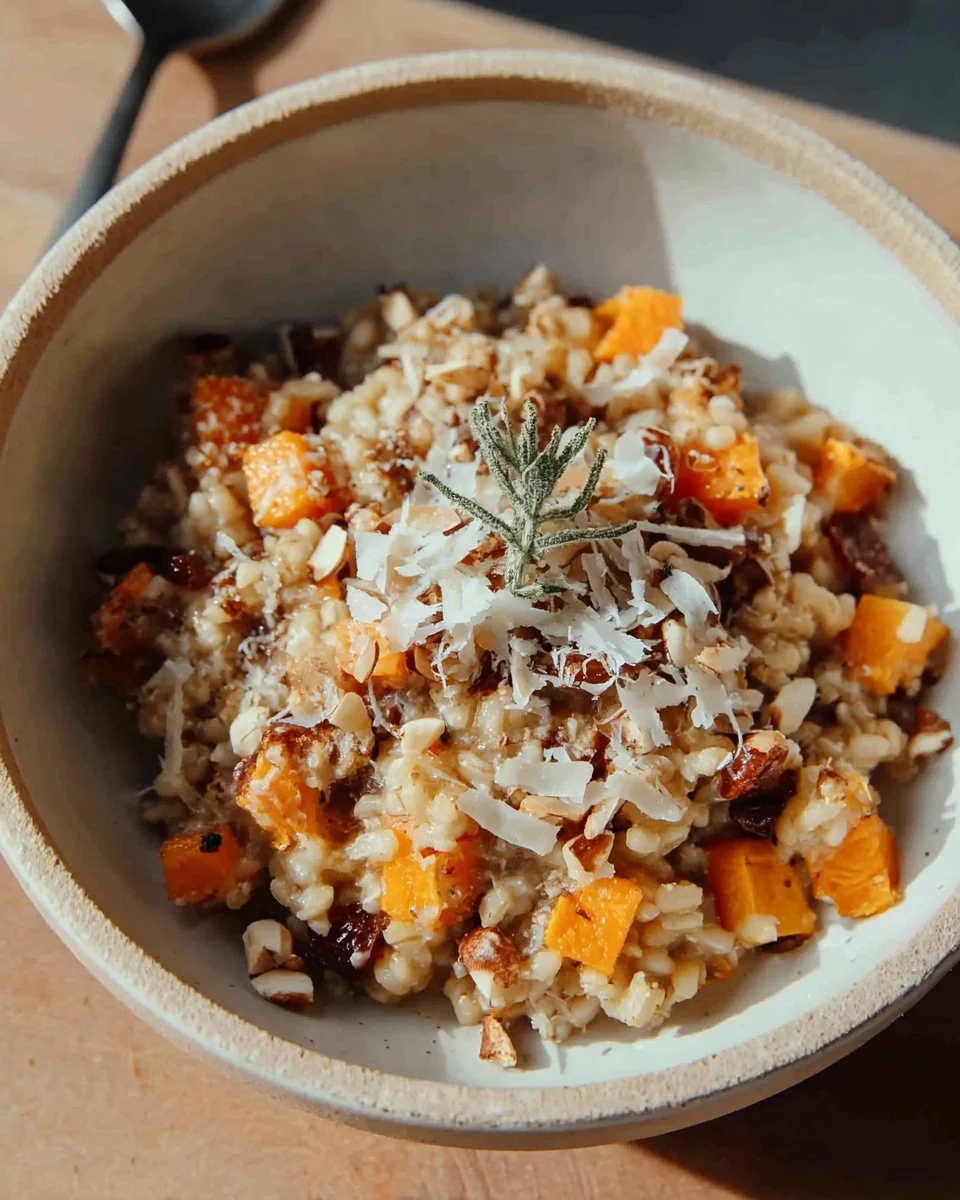
How to Serve Roasted Butternut Squash Risotto with Sugared Walnuts
Serve in a format that protects structure and keeps contrast visible. For a natural internal pairing, add butternut squash lasagna in your related recipes.
For broader context, this resource on risotto structure can support your technique decisions.
Variation
Change one support element while keeping the core workflow unchanged, so structure remains predictable.
For a second variation path, adjust one finish element to shift texture or aroma without altering the base ratio.
Tips to Make Roasted Butternut Squash Risotto with Sugared Walnuts
- Use consistent portioning for predictable texture across servings.
- Build flavor in small staged adjustments instead of one late correction.
- Track visual cues such as browning, gloss, or structure set before finishing.
- Keep moisture-heavy elements controlled in the final stage.
- Use clean serving tools to protect structure on the plate.
- Retaste after a short rest and apply only one correction at a time.
- Store components in a way that preserves contrast and freshness.
Common Mistakes to Avoid
Symptom: Uneven texture. Cause: Inconsistent staging. Fix: Standardize prep order and portions.
Symptom: Flat flavor. Cause: Late heavy correction. Fix: Season gradually across stages.
Symptom: Structural collapse at service. Cause: Excess moisture late in the process. Fix: Reduce wet additions and reinforce base handling.
Symptom: Dull finish. Cause: Final stage rushed. Fix: Wait for clear set cues before serving.
Storing Tips
Store roasted butternut squash risotto in airtight containers in the refrigerator for up to 3 days.
Reheat with small additions of liquid and gentle stirring to restore creamy texture.
Freeze only if needed for up to 1 month, then reheat gradually to reduce texture breakdown.
FAQs
Can roasted butternut squash risotto be prepared ahead?
Yes, if structure-sensitive finishing steps are kept close to serving time.
How do you improve butternut risotto recipe consistency?
Use staged prep and adjust one variable at a time.
What helps walnut risotto topping stay natural in texture?
Control moisture and avoid overmixing or overloading.
How should you handle autumn risotto bowl in storage?
Store in a way that protects the primary texture of the dish.
What supports creamy squash risotto repeatability?
Use the same prep order and final quality checks each batch.
What is the fastest pre-serve quality check?
Check structure first, then aroma, then final flavor balance.
Risotto Texture Observation
In repeated squash risotto batches, the best balance came when roasted squash was folded in after the rice reached a creamy flow. Early addition caused cube breakdown and pushed the texture toward mash. A practical fix is to keep squash separate until the final integration stage, then fold gently once or twice. This works because late folding protects cube structure while preserving starch-driven risotto texture.
Conclusion
roasted butternut squash risotto becomes more dependable when staged prep, texture checks, and final handling are aligned in one clear workflow. This produces cleaner flavor and stronger service behavior across batches.
A final short quality pass before plating helps catch small drifts and keeps results consistent.
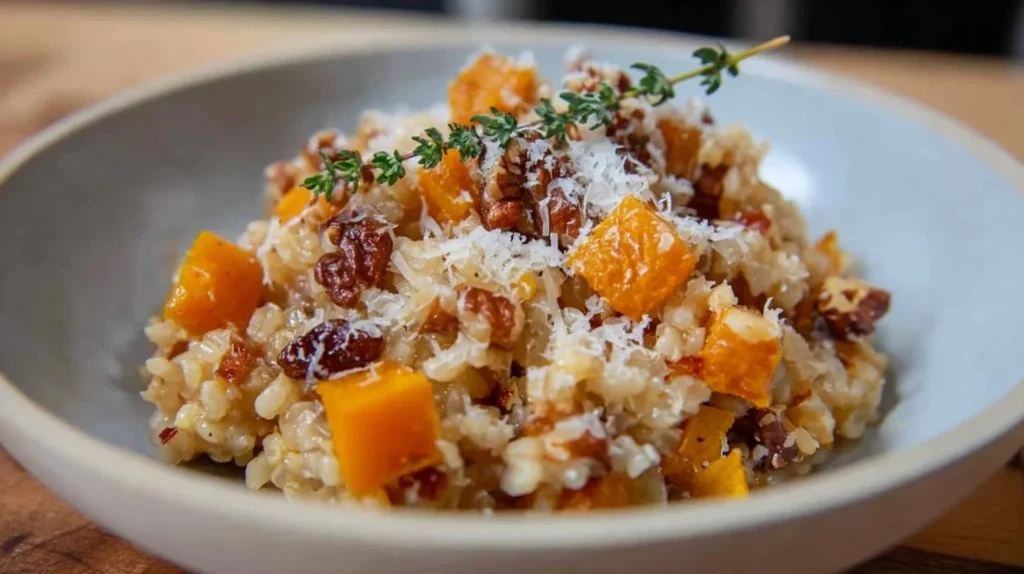
Roasted Butternut Squash Risotto with Sugared Walnuts
A creamy and flavorful risotto with roasted butternut squash and a sweet-savory walnut topping, emphasizing texture and flavor balance.
Ingredients
Method
Preparation of Sugared Walnuts
- Preheat oven to 400 degrees.
- Arrange walnuts in a single layer on a jelly-roll pan and bake for 5 minutes until toasted, stirring twice.
- Drizzle melted butter over warm nuts, sprinkle with brown sugar and black pepper, and toss to coat.
Preparation of Butternut Squash
- Toss butternut squash with olive oil and arrange in a single layer on a jelly-roll pan.
- Bake for 15 minutes until just tender; then stir in garlic and set aside.
Cooking Risotto
- In a saucepan, bring chicken broth and water to a simmer.
- In a large saucepan over medium heat, cook pancetta until browned, about 5 minutes.
- Add onion and cook for 3 minutes until tender.
- Stir in rice and cook for 2 minutes, then add chardonnay and cook for 1 minute until nearly absorbed.
- Gradually stir in broth mixture, 1/2 cup at a time, stirring until absorbed each time (about 20 minutes total).
- Stir in the squash, thyme, salt, and pepper.
- Top with cheese and sugared walnuts before serving.
Notes
Use consistent portioning for predictable texture across servings. Store components in a way that preserves contrast and freshness.